
*This post may contain affiliate links for which I earn commissions.*
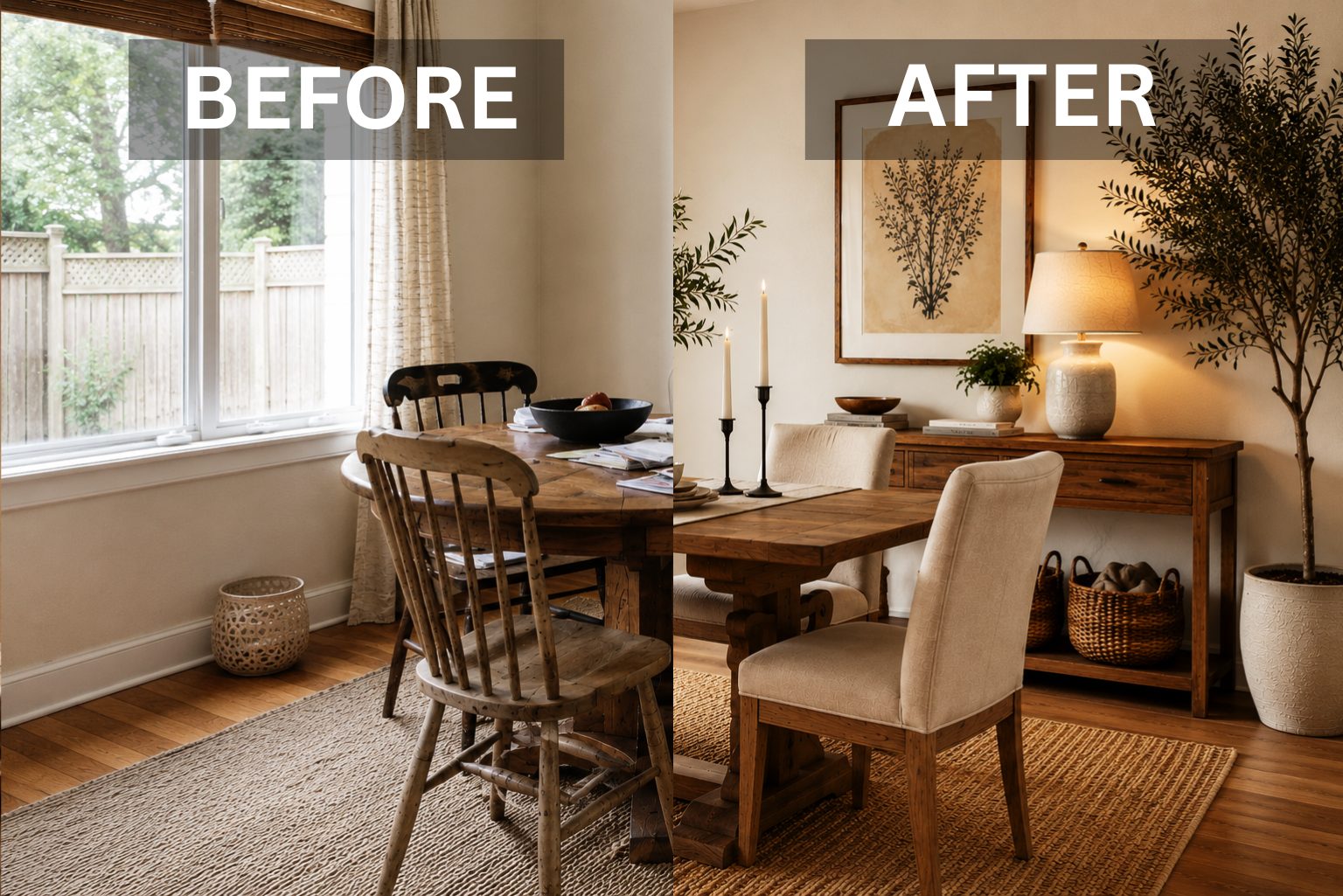
A dining corner doesn’t need a full renovation to feel completely different. This one started as an overlooked spot with mismatched pieces, flat lighting, and very little personality. By the end, it felt warm and inviting, thoughtfully chosen, and ready for everything from weekday breakfasts to casual dinners with friends.
The best part was that the refresh stayed firmly within a budget mindset. Instead of replacing everything, the focus was on improving the pieces that mattered most and creating a stronger sense of cohesion.
The Starting Point
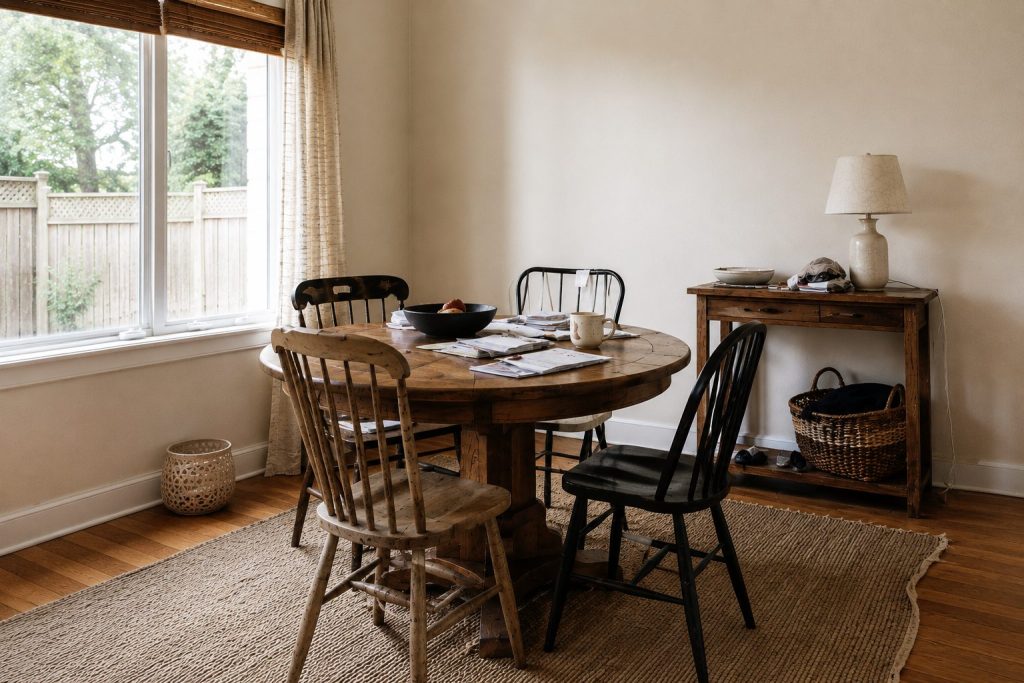
The dining corner sat beside a window, but somehow still felt a little dim. A small table was pushed against the wall, surrounded by chairs that didn’t quite relate to one another. The walls were bare, the lighting felt cold, and everyday items tended to collect on the tabletop.
Nothing was technically wrong with the space. It simply lacked intention.
The overall look felt unfinished, with too many visual gaps and not enough elements connecting the room together. The corner blended into the background rather than serving as a comfortable gathering spot.
What I Wanted It to Feel Like
The goal wasn’t to create a formal dining room. Instead, I wanted the corner to feel effortlessly styled, functional, and comfortable enough for daily use.
Clean lines were important, but so was warmth. Natural wood tones, soft textiles, and layered lighting became the guiding elements.
I also wanted the space to feel larger without adding more furniture. That meant focusing on scale, visual balance, and a few thoughtfully chosen details rather than filling every empty area.
Why this works: A smaller dining space feels more inviting when every piece has a purpose and the materials relate to one another.
What Changed (and Why It Worked)
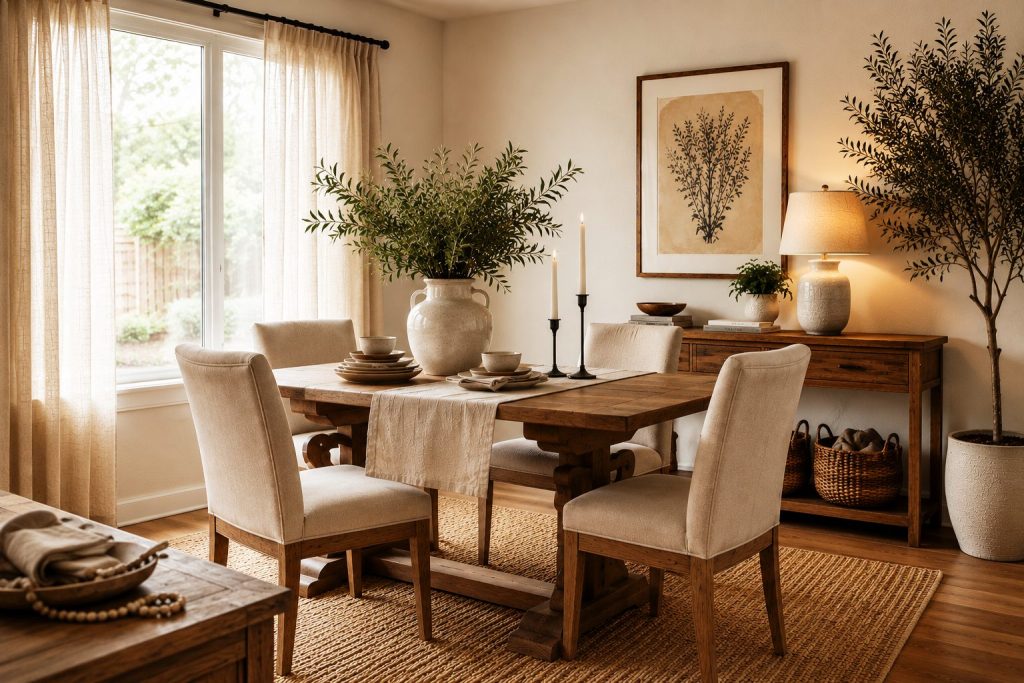
- Replaced visual clutter with a simple centerpiece. A ceramic vase with seasonal stems created a focal point and made the table feel intentionally styled. The visual effect was calmer and more polished.
- Added a neutral area rug beneath the table. The rug defined the dining zone and anchored the furniture. It immediately made the corner feel more complete.
- Swapped mixed finishes for warmer wood tones. Keeping the furniture finishes closer in tone created better flow. The space felt more cohesive and less pieced together.
- Introduced layered lighting. A small table lamp on a nearby console added a soft evening glow. The corner felt warmer and more welcoming after sunset.
- Added framed artwork at eye level. The wall finally had visual weight and helped connect the dining corner to the rest of the room. It created a finished, intentional backdrop.
- Brought in texture through textiles. A linen runner softened the harder surfaces and introduced subtle movement. The result felt relaxed rather than overly formal.
- Adjusted furniture placement slightly. Pulling the table away from the wall by a few inches improved balance. It’s one of those small changes people rarely notice directly, but they often feel the difference.
What Helped the Most
Foundation Pieces
- Look for: solid wood or wood-look finishes with simple silhouettes
- Helped by creating a stronger visual anchor for the entire corner
- Look for: low-pile construction, durable fibers, neutral tones
- Helped define the dining zone and add warmth underfoot
- Look for: comfortable seats, clean lines, coordinating finishes
- Helped create consistency and visual balance
Function + Comfort
- Look for: natural fibers and soft texture
- Helped break up hard surfaces and add a relaxed feel
- Look for: slim depth and warm wood tones
- Helped provide styling space without overwhelming the room
- Look for: warm light output and simple ceramic or metal bases
- Helped soften the atmosphere in the evening
Finishing Elements
- Look for: neutral palettes, botanical themes, or abstract compositions
- Helped fill the wall and create a complete backdrop
- Look for: organic shapes and matte finishes
- Helped establish a focal point on the table
- Look for: natural movement and realistic texture
- Helped bring life and softness into the space


Tiny Tweaks, Big Impact
- Use matching candle holders to create visual rhythm.
- Keep the centerpiece low enough for conversation across the table.
- Add one woven basket nearby for hidden storage.
- Choose warm white bulbs instead of cooler daylight bulbs.
- Leave a little negative space on the tabletop rather than filling every surface.
- Fold a linen runner casually instead of arranging it perfectly.
- Introduce one natural element such as olive branches or eucalyptus stems.
Your Next Move
If you’re refreshing a dining corner on a budget, start with one anchor piece and build around it. A rug, a better light source, or a set of coordinating chairs can change the feel of the room surprisingly quickly.
The most successful before-and-after updates aren’t usually about adding more. They’re about making clearer choices. Look at your dining corner and ask yourself what feels disconnected, then focus on solving that one thing first.
A small, thoughtfully chosen update often creates more impact than a complete shopping list.