
*This post may contain affiliate links for which I earn commissions.*
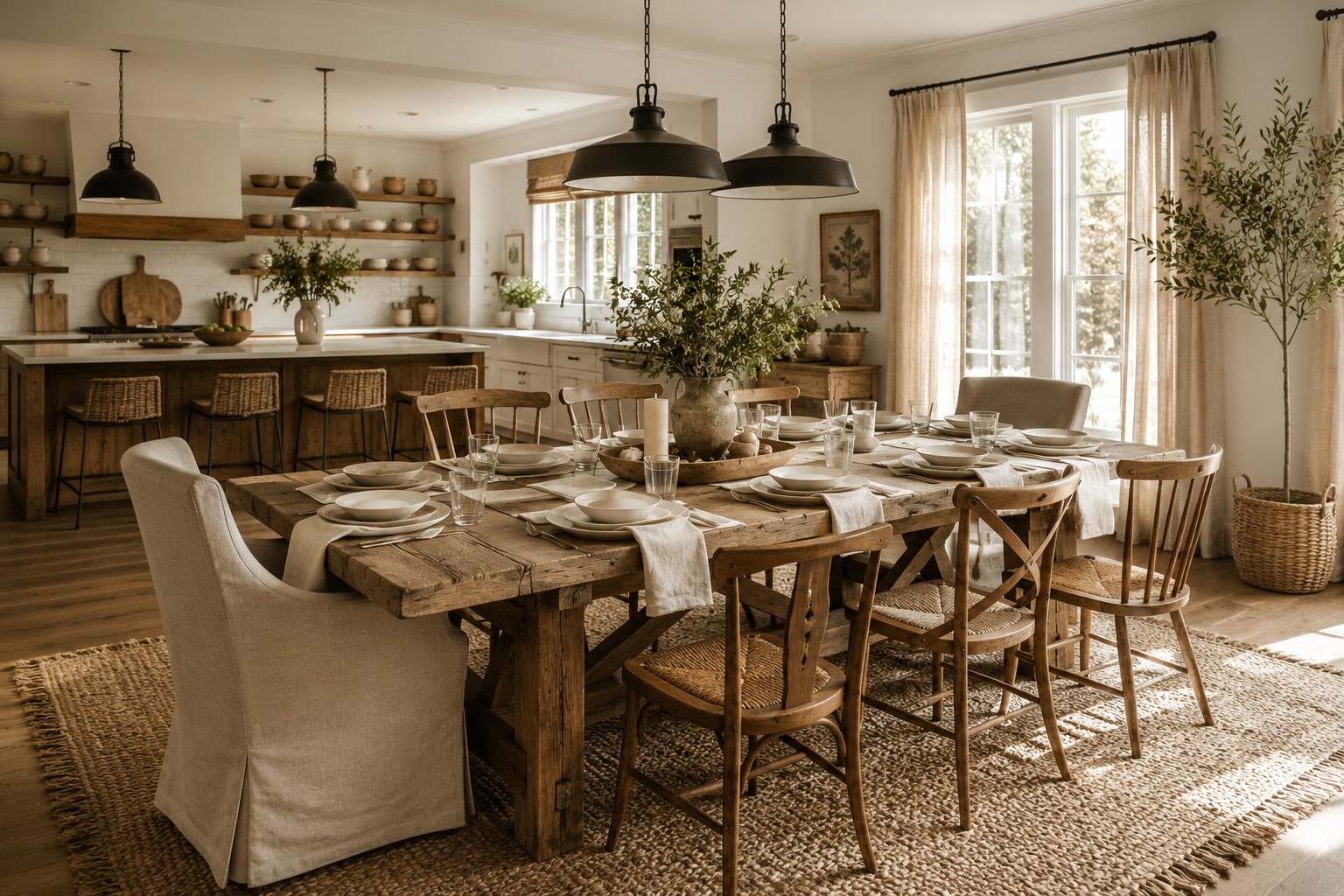
Imagine the soft glow of late afternoon light filtering through linen curtains onto a long wooden table. Its surface shows the natural grain and subtle imperfections that speak of years of quiet family meals. Mismatched chairs in warm tones pull up close, while a simple linen runner and a few ceramic pieces create an inviting spread ready for conversation and good food.
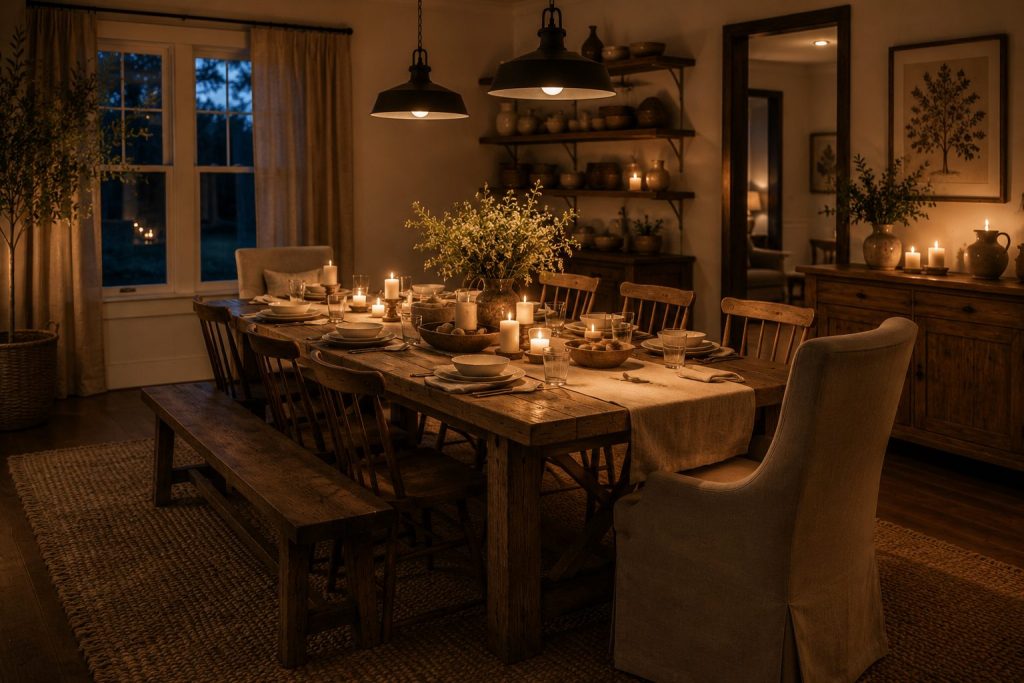
This rustic dining setup delivers that effortless warmth and functional beauty without demanding a high-end budget. It balances natural materials and clean lines to feel thoughtfully chosen and welcoming.
The Building Blocks of This Look
The foundation rests on natural wood tones that range from honey to deeper walnut shades. These bring an inherent warmth that makes the space feel lived-in rather than staged.
Layered textures keep things interesting. Think rough-hewn wood paired with softer linen and woven elements. The contrast adds depth without clutter.
Lighting plays a supporting role with aged metal or simple pendant fixtures that cast a gentle, flattering light over the table. This highlights the materials rather than competing with them.
Seating mixes forms for an unpretentious feel. A few upholstered pieces alongside wooden or metal chairs create balance and comfort for longer gatherings.
The overall palette stays grounded in earthy neutrals with occasional muted accents. This keeps the focus on the textures and the way light moves across surfaces.
Why this works: It creates a space that feels warm and inviting through honest materials and intentional restraint, rather than ornamentation.
Pieces to Recreate This Style
Here are the key product types to build your own version. Focus on quality in materials and scale that suits your room.
- Reclaimed or distressed wood dining table — Look for solid wood with visible grain, around 72-96 inches long and 36-42 inches wide. It anchors the room and provides that natural centerpiece.
- Wooden or upholstered dining chairs — Choose a mix: some with spindle backs in light oak, others with simple linen or leather seats. Aim for 6-8 pieces that vary slightly in tone for relaxed character.
- Linen or burlap table runner — Opt for neutral tones in natural fibers, 12-16 inches wide. It softens the table surface and adds subtle texture under place settings.
- Ceramic or stoneware dinnerware — Select matte-finished plates and bowls in off-white or taupe. Hand-thrown styles with slight irregularities enhance the handmade feel.
- Wooden or woven placemats — Go for seagrass or rattan in natural shades. They protect the table while introducing another organic layer.
- Pendant or chandelier lighting — Choose aged brass, black metal, or wood-and-metal combinations with exposed bulbs or simple shades. Hang one or a linear fixture centered over the table.
- Jute or sisal area rug — Select a low-pile option in neutral tones, sized to fit under the table and chairs with 12-18 inches of floor showing around the edges. It defines the space and adds softness underfoot.
- Wooden or metal centerpiece tray — Look for a shallow tray or bowl in reclaimed wood or galvanized metal to hold candles or greenery.
- Linen napkins and simple glassware — Neutral linen in soft beige or gray pairs well with clear or lightly tinted tumblers for everyday use.
- Wall accents like open shelving or a narrow console — Use weathered wood shelves for displaying a few ceramic pieces or books, keeping surfaces uncluttered.
These elements work together to create clean lines with thoughtful layers of texture and material.
Fast Favorites for This Look
A few items make an outsized difference when you’re starting out.
Look for a solid wood dining table with a natural finish that shows grain variation. It sets the tone immediately.
Simple linen table runners in undyed or lightly woven fabrics bring softness and prevent the wood from feeling too bare.
Aged metal pendant lights with warm bulbs add just enough polish while keeping the mood relaxed.


Look for Less
You don’t need reclaimed barn wood to capture the essence.
Instead of a custom distressed table, choose a solid pine or acacia one with a hand-rubbed finish that mimics the patina over time.
Swap upholstered leather chairs for linen or cotton slipcovers on simpler frames. They offer similar comfort and texture at a lower price.
For lighting, select matte black or oil-rubbed bronze fixtures rather than antique brass. The effect remains warm and understated.
Use affordable jute rugs from natural fibers instead of custom woven ones. Many have the right scale and neutral tone.
If ceramic dinnerware feels pricey, source stoneware sets with matte glazes from everyday collections. Slight variations in shape add to the collected feel.
The Easy Assembly Order
Start with the table as your focal point. Position it centrally in the room and ensure there’s comfortable clearance around it.
Layer the rug next, centering it so the chairs sit partially on and off the edge. This grounds the arrangement visually.
Add the table runner or placemats, then set out the dinnerware and glassware in a simple, symmetrical layout.
Bring in seating, mixing styles as you arrange them. Pull chairs in at varied but inviting distances.
Finish by hanging the lighting fixture at the right height—about 30-36 inches above the table surface—so it illuminates without glaring.
The Little Details That Sell the Look
- Add a small wooden bowl filled with seasonal greenery or simple white candles for subtle movement and scent.
- Tuck a folded linen napkin at each place with a sprig of herbs or a single flower for an effortless touch.
- Keep one wall relatively bare or add a single piece of framed art in muted tones to avoid visual competition.
- Use dimmable bulbs in your lighting so you can adjust the mood from day to evening.
- Allow a few intentional gaps on the table surface so the wood grain remains visible and the setting feels breathable.
A believable micro-aside: I once swapped out a too-shiny chandelier for a simpler metal one, and the whole room immediately felt more grounded.
What small change could you make today—perhaps layering a runner or adjusting your lighting—to bring more of this warm, rustic feeling into your dining space? The beauty lies in how the pieces come together through use over time.