
*This post may contain affiliate links for which I earn commissions.*
A dining table can feel oddly unfinished even when the room itself looks beautiful. Maybe the chairs are in place, the lighting feels right, and the table is clear, yet something still seems missing. A few thoughtfully chosen layers can make the entire space feel more intentional without adding clutter.
By the end of this guide, you’ll know exactly how to style a dining table that feels balanced, inviting, and beautifully put together for everyday living or special occasions.
Quick Supply List
Foundation Pieces
- Table runner – Linen or cotton runners between 12 and 18 inches wide work well for most dining tables.
- Centerpiece vessel – A ceramic vase, wood bowl, or stone container helps create a visual focal point.
Decorative Layers
- Fresh greenery or faux stems – Olive branches, eucalyptus, or seasonal greenery add natural texture.
- Candle holders – Mixed-height holders create warmth and soft visual interest.
- Decorative tray or bowl – Useful for grouping smaller pieces together.
- Stack of books – Coffee table books or design books add subtle height.
Optional Finishing Pieces
- Small sculptural object – Wood, stone, or ceramic accents add personality.
- Cloth napkins – Great for special occasions or everyday styling.
- Placemats – Woven textures help define each place setting.
- Seasonal accents – Fruit bowls, branches, or small botanical elements can refresh the look throughout the year.
Helpful for Small Spaces
- Low-profile centerpiece – Keeps sightlines open across the table.
- Narrow runner – Prevents a smaller dining table from feeling crowded.
Set Yourself Up for Success
Before arranging anything, take a few minutes to simplify the table.
- Remove items that don’t belong there, including mail, chargers, and everyday clutter.
- Measure your table length if you’re unsure about runner or centerpiece sizing.
- Decide whether the table is used daily, occasionally, or mainly for entertaining.
- Leave enough open surface area for practical use.
- Gather all styling pieces nearby before you start arranging.
Why this works: A clear starting point makes it easier to see balance, scale, and spacing as you build the arrangement.
Follow These Steps
1. Start With a Clean Foundation
Wipe down the table and remove everything from the surface. Even beautiful decor looks better when it sits on a clean, uncluttered backdrop.
2. Add a Runner or Base Layer
Place a runner down the center of the table if it suits your style. On round tables, a tray or large bowl can act as the foundation instead.
Choose materials with texture such as linen, woven cotton, or natural fibers for a warm and inviting feel.
3. Establish a Focal Point
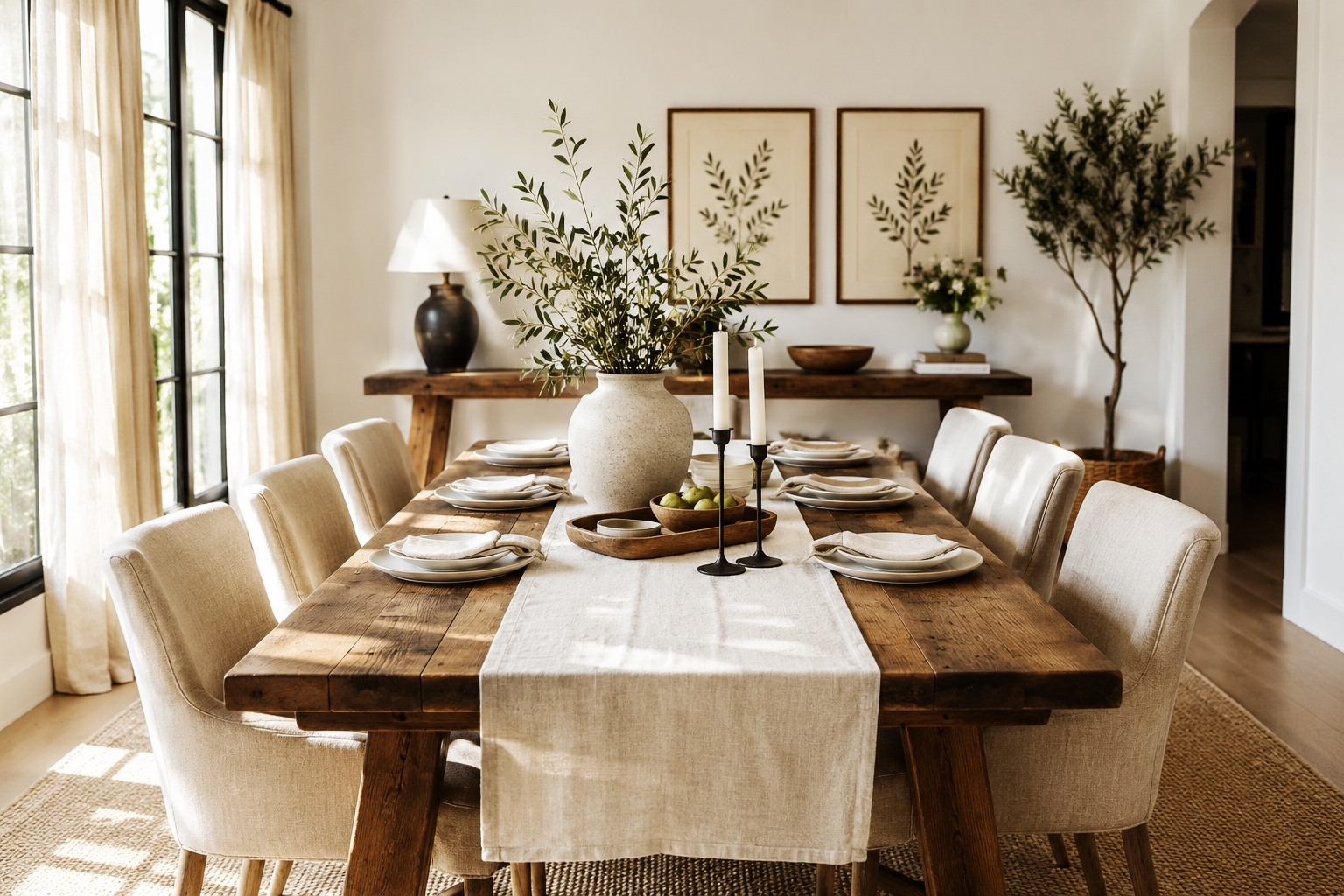
Place your largest piece in the center. A ceramic vase with olive branches, a stone bowl, or a collection of candles works well.
Aim for a centerpiece that feels proportional to the table size. On smaller tables, one strong focal point usually works better than several competing pieces.
Quick Checkpoint: The table should already feel anchored, with one clear area drawing the eye.
4. Introduce Height
Add stems, branches, or taller candle holders to create vertical interest.
If your dining table is used daily, keep the arrangement low enough for easy conversation across the table.
5. Layer Supporting Elements
Place one or two smaller items around the centerpiece.
Examples include:
- A small stack of books
- A decorative bead garland
- A shallow tray
- A small ceramic accent
I often find that stopping at three main elements creates a cleaner look than continuing to add more pieces.
6. Group Items Intentionally
Arrange accessories in small groupings rather than spreading them evenly across the table.
Odd-numbered groupings tend to feel more natural. A vase, candle holder, and bowl often look more balanced together than four unrelated objects.
Quick Checkpoint: The arrangement should feel connected rather than scattered.
7. Check the Scale
Step back several feet and look at the table from different angles.
If one item dominates the arrangement, reduce its size or add another element to balance the composition.
8. Leave Breathing Room
Resist the urge to fill every inch of surface space.
Empty space helps the styling feel effortlessly styled and allows the table to remain functional for daily use.
9. Add Seasonal Details if Desired
A bowl of pears in autumn, fresh greenery in winter, or simple branches in spring can refresh the look without requiring a complete redesign.
Quick Checkpoint: The table should feel balanced, practical, and visually connected to the rest of the room.
Simple Upgrades
If you’d like a slightly more layered look, these additions can make styling easier:
- A large handcrafted ceramic vase for added texture
- Linen napkins displayed casually beside a centerpiece
- A decorative tray for organizing smaller accessories
- Taper candle holders in varying heights
- A shallow wood bowl for seasonal styling
Common Mistakes (and Fixes)
- If the table feels crowded… remove one or two decorative pieces and leave more open space.
- If everything looks flat… add height with stems, branches, or taller candle holders.
- If the centerpiece feels too small… place it on a tray or layer it with a supporting object.
- If the table feels too formal… swap polished accessories for natural materials like linen, wood, or woven textures.
- If the arrangement looks scattered… group items closer together to create a stronger focal point.
- If a small dining table feels overwhelmed… use one statement vase instead of multiple decorative objects.
If You Want a Different Look
Minimal and Refined
Use a single ceramic vase with a few stems and leave most of the table surface visible. Clean lines become the main design feature.
Warm Modern Farmhouse
Layer a linen runner, candle holders, and natural wood accents. The mix of textures creates functional beauty without feeling busy.
Casual Everyday Style
Place a shallow bowl in the center filled with seasonal fruit and pair it with a simple candle holder.
Cozy Gathered Look
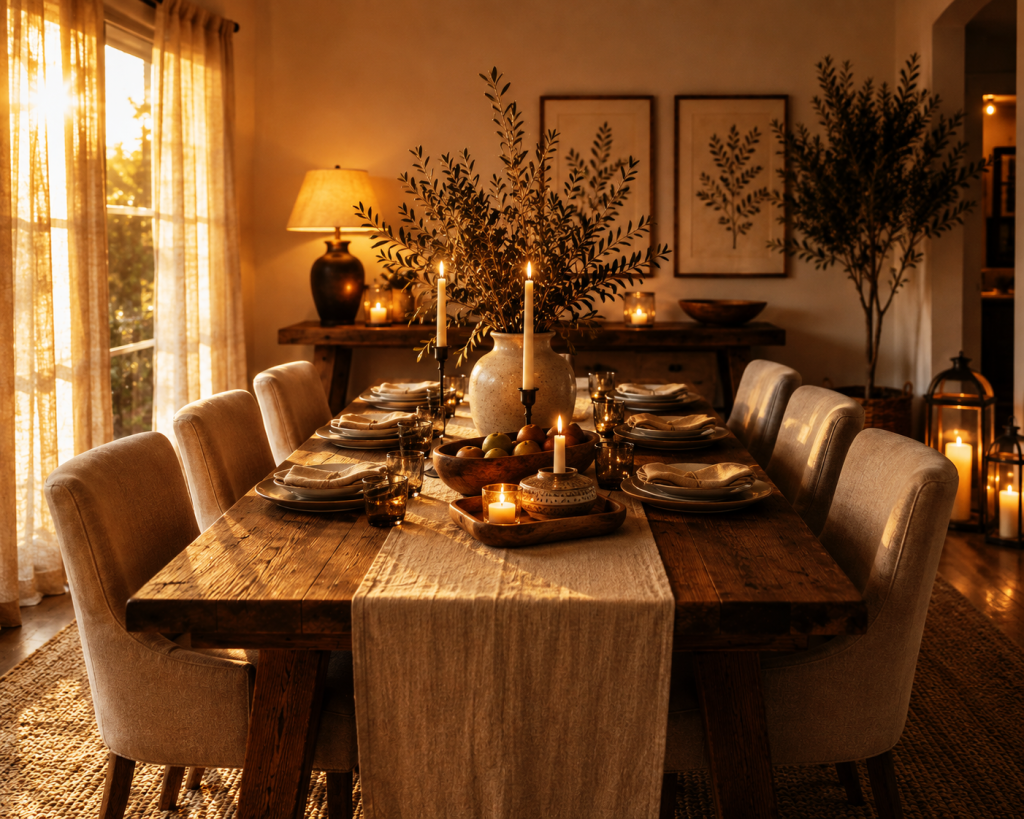
Add woven placemats, stacked books, and soft candlelight for a more layered arrangement.
Small-Space Friendly
Choose one low centerpiece and avoid tall decorative pieces. Keeping sightlines open helps the dining area feel larger.
Final Quick Check
Before calling it done, run through this quick checklist:
- Is there one clear focal point?
- Does the arrangement feel balanced from all sides?
- Can people comfortably use the table?
- Are the materials and colors connected to the rest of the room?
- Is there enough open space left visible?
A beautifully styled dining table rarely needs dozens of accessories. A few thoughtfully chosen pieces, arranged with intention, often create the most lasting impact. Start with one focal point, make small adjustments, and let the table evolve naturally as the seasons change.