*This post may contain affiliate links for which I earn commissions.*
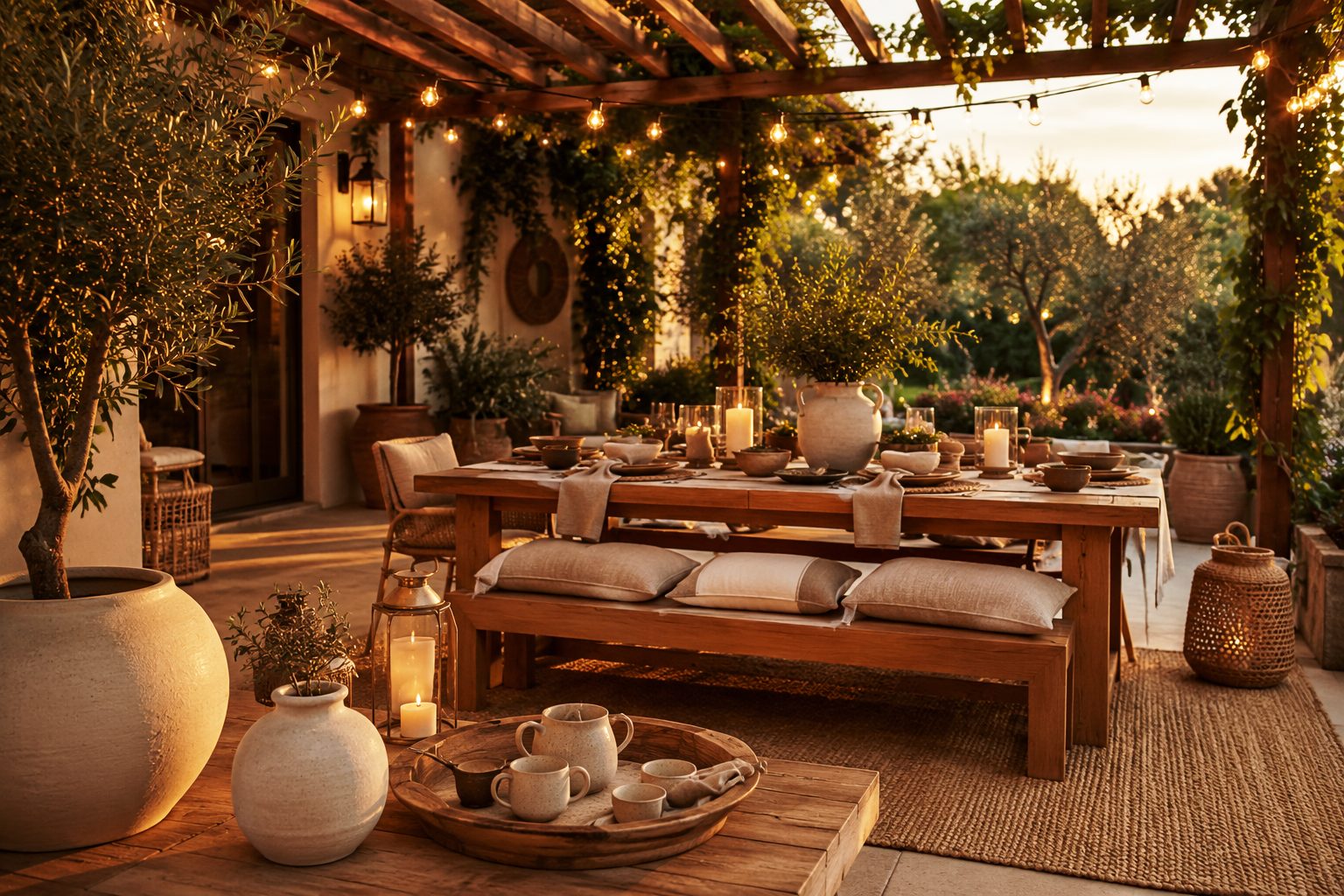
There’s a particular kind of afternoon that summer does better than any other season. The light is long, the air is warm but not yet heavy, and somehow you find yourself outside longer than you planned. That’s the feeling this summer’s outdoor aesthetic is built around: spaces that feel cozy and unhurried, minimal in the best way, with a quiet elegance that doesn’t try too hard.
Why This Look Is Everywhere
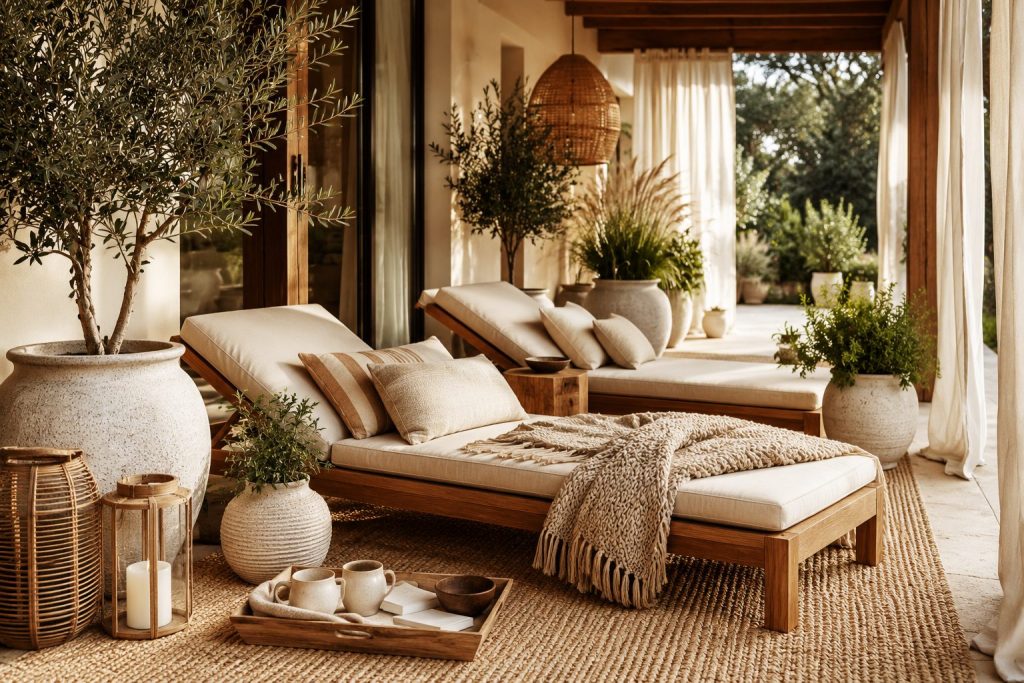
There’s something happening right now in outdoor design that feels like a collective exhale. People are moving away from the overly curated, perfectly matchy sets and toward something that feels more lived-in and layered. Natural wood is at the center of that shift.
- It reads as both casual and refined, which means it works from a modest balcony to a sprawling terrace.
- The warm tones of teak, acacia, and reclaimed timber naturally complement summer’s palette of greens, sandy neutrals, and dusty blues.
- In a world full of plastic and powder-coat finishes, natural wood has texture. It invites you to actually touch things.
- The trend this year leans toward a more minimal, pared-back approach. Less staging, more intention.
- Luxury outdoor brands have made a big push into this space, which has lifted the overall quality of what’s widely available.
- It photographs beautifully, but more importantly, it actually feels good to sit in.
- There’s a playful quality to how wood mixes with other natural materials. Nothing feels too serious, too formal, or too fussy.
The Style Ingredients
Getting this look right comes down to a few consistent choices. Here’s what defines it at its best.
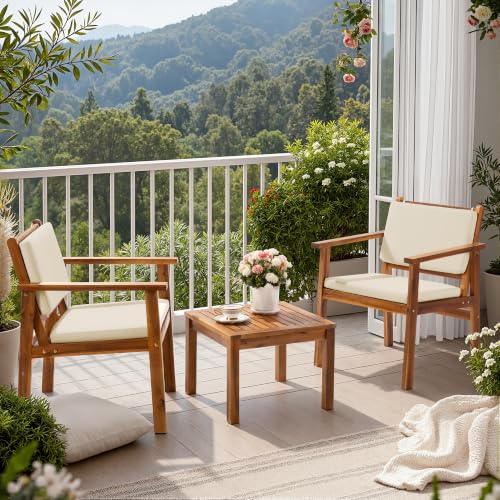
Warm, honey-toned woods Think teak, acacia, mango wood, or eucalyptus in their natural or lightly oiled state. Bleached or whitewashed finishes work too, but the deeper caramel tones read as more grounded and cozy this season.
Minimal silhouettes with visible joinery The shapes themselves stay clean and unfussy. Low-slung seating, straightforward rectangular tables, and simple benches. What gives them character is visible dowels, mortise-and-tenon joints, or thoughtfully placed hardware in matte brass or blackened iron.
Natural textiles in undyed or earthy tones Outdoor cushions and throws in flax, off-white, sage, warm terracotta, or muted charcoal. No loud prints right now. The wood is the visual anchor; the textiles are supporting players.
Mixed material moments Stone, ceramic, and rattan make ideal companions. A concrete side table next to a teak lounger, or a rattan lantern hung above a wood dining set. The combinations feel organic rather than coordinated.
Layered greenery This look thrives with real plants around it. Large-leafed tropicals in terra cotta pots, trailing herbs in simple wooden planters, or a low-profile olive tree. The greenery adds playful life to the minimal structure.
Low, ambient lighting Edison-style string lights, handmade ceramic candleholders, or simple lanterns in wood and glass. The goal is warmth after dark, not performance lighting.
Ways to Bring It In
You don’t need to redo your entire outdoor space. These ideas work whether you’re starting from scratch or layering into what you already have.
- Swap synthetic cushions for natural fiber covers. Look for outdoor cushion covers in linen-look or woven cotton blends. A simple color shift from bright to sand or sage changes the whole mood instantly.
- Introduce one large wood anchor piece. A teak dining table or a solid wood bench sets the tone for everything around it. Start here and build outward.
- Add a wood plant stand cluster. Group two or three plants at different heights using simple slatted wood stands. This adds dimension without crowding the space.
- Layer a natural fiber outdoor rug. Jute, sisal, and seagrass rugs are now made in outdoor-safe versions. A simple flatweave in cream or warm beige does most of the heavy lifting on its own.
- Hang string lights at canopy height. Drape them overhead rather than wrapping them around railings. When they’re above you, the effect is much more elegant and far less campy.
- Build a simple bar cart moment. A small wood-framed bar cart with a tray, a few ceramics, and a single trailing plant is one of those additions that makes outdoor evenings feel genuinely considered.
- Try a single sculptural ceramic pot. Large, matte, handmade-looking ceramic pots in warm white, terracotta, or dark clay read as both minimal and luxurious beside natural wood furniture.
- Use a wood tray as a table anchor. On a coffee table or dining surface, a wide wooden tray pulls smaller items together without making things look cluttered. Candles, a small vessel, a single stem.
- Add a hammock or hanging chair. This is where the playful element lives in this trend. A natural cotton hammock or rattan hanging chair instantly softens a space and invites longer lingering. I’ll admit, the hanging chair was the one addition that finally made our outdoor corner feel actually inviting.
- Choose matte black or brass hardware throughout. If your space has multiple wood pieces, unify them with consistent hardware tones. Matte black feels minimal and modern; brass reads warmer and a little more refined.
A Few Helpful Finds
Before we get into the full product breakdown, three categories are doing a lot of work in this look right now.
Outdoor dining chairs in solid teak or acacia create instant warmth and pair with almost any table. Look for sets with woven seat panels, which add texture without requiring cushions.
Rattan or wood-framed pendant lights designed for covered outdoor spaces have become genuinely beautiful. The interplay of warm light through a natural fiber shade is hard to beat.
Handmade ceramic planters in earthy tones round out the look and give it the kind of grounded, organic quality that synthetic pots simply can’t replicate.


Pieces That Pull It Together
Here are the product types most worth investing in for this look, with notes on what to look for.
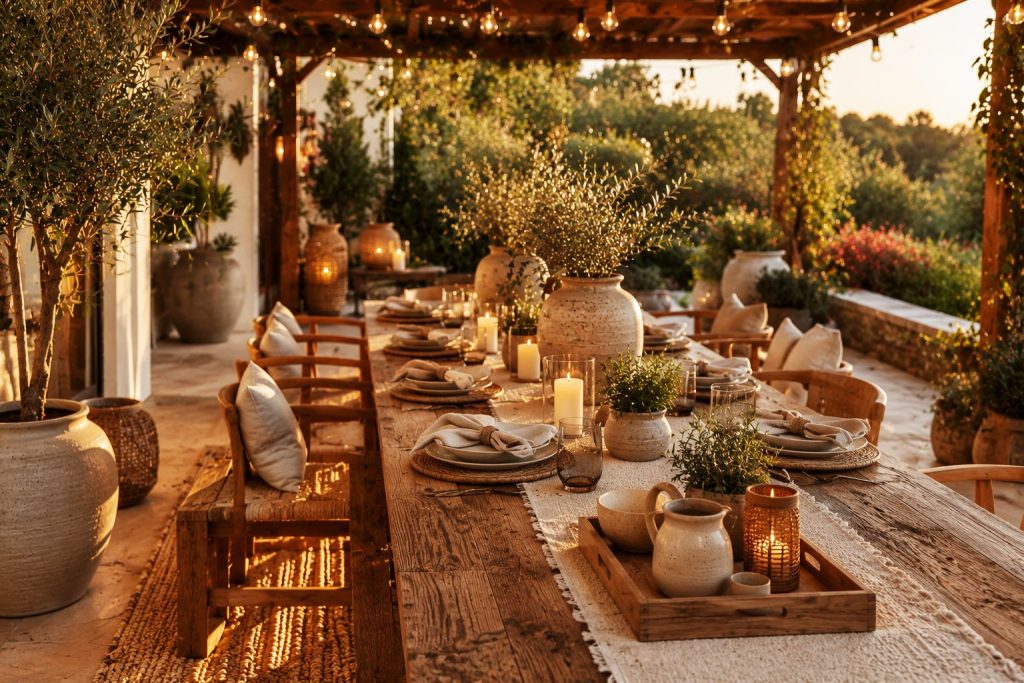
1. Teak or acacia outdoor dining table Look for tables with a natural oil finish rather than heavily lacquered surfaces. A slightly weathered or brushed finish actually looks better over time. Sizes between 70–90 inches work well for families; smaller oval options suit tighter spaces without sacrificing the warmth.
2. Solid wood outdoor dining chairs Slatted backs and solid seats in matching or complementary wood tones. Woven seats in natural fiber add texture. Weight matters here. Heavier chairs feel more luxurious and stay put in wind.
3. Low-profile wood loungers or daybeds The key detail is a clean, low silhouette. Anything that sits close to the ground has an inherently relaxed, cozy quality. Look for adjustable backrests and finishes that won’t splinter over time.
4. Natural fiber outdoor rug Woven seagrass, polypropylene in a jute look, or indoor/outdoor flatweave in cream or sage. Size up. An outdoor rug almost always looks better one size larger than you think you need.
5. Wood and rattan side tables A mix of a small solid-wood side table and a rattan tray table creates variety. Look for tabletops that are recessed slightly or have a lip so trays and ceramics stay put.
6. Outdoor string lights in warm white Vintage-style filament bulbs on a heavy-gauge cord. Look for 2700K color temperature for the warmest possible glow. Bulb spacing of 12–18 inches feels properly generous.
7. Ceramic or terra cotta planters Unglazed terra cotta, matte white, or dark clay finishes. Handmade or hand-finished appearances work well here. Sizes: at least one statement pot above 14 inches, and two to three smaller companions.
8. Outdoor throw pillows in natural tones Linen-look outdoor fabric in undyed or earthy tones. Look for removable covers with hidden zips. Solid colors and simple woven textures outperform prints in this look.
9. Wood serving tray or table board A wide, handled tray in teak or acacia that doubles as a display surface. Look for food-safe finishes since these tend to migrate from the kitchen outdoors.
10. Rattan or woven pendant or lantern For covered patios or pergolas, a hanging lantern in rattan or woven seagrass adds warmth overhead. Look for weatherproof ratings and fittings that accept standard outdoor bulbs.
11. Natural cotton hammock or hanging chair Handwoven cotton in off-white or natural, or a rattan hanging chair with cotton cushion insert. Look for weight ratings above 300 lbs for long-term durability.
12. Folding wood garden stools A set of two or three simple folding stools in solid wood functions as extra seating, impromptu side tables, or plant risers. Clean, functional beauty in its simplest form.
Low-Effort, High-Impact
If you want results fast without overhauling everything, here’s where to start.
- Begin with the textile layer. New cushion covers, a throw, and a rug can visibly change a space in an afternoon with no heavy lifting required.
- Oil your existing wood furniture. If you already have teak or acacia pieces that look dry or gray, a single application of teak oil makes them look nearly new. This costs almost nothing.
- Add one large plant. A single large-leafed plant in a quality pot does more than six small ones scattered around.
- Replace any plastic or metal accessories with natural alternatives. Swap out a plastic watering can for a copper or clay one. Swap a wire plant stand for a simple wood slatted version.
- Choose candles over electric accent lights. Outdoors in summer, a cluster of pillar candles in varying heights on a tray creates instant warmth without running any power.
- Keep surfaces clear. The minimal quality of this look depends on restraint. One carefully chosen item on a surface reads as thoughtful. Four items reads as cluttered.
If none of this feels obvious yet, pick just one thing: a natural fiber outdoor rug. It grounds the space, adds warmth underfoot, and immediately signals that the area was intentionally designed. Everything else can come after. Once the rug is down, the next step tends to make itself obvious.