
*This post may contain affiliate links for which I earn commissions.*
Creating a bedroom that feels quiet, refined, and expensive can seem out of reach, especially when so many “luxury” spaces rely on large budgets. The good news is, this look is less about how much you spend and more about how thoughtfully each piece is chosen.
The Building Blocks of This Look
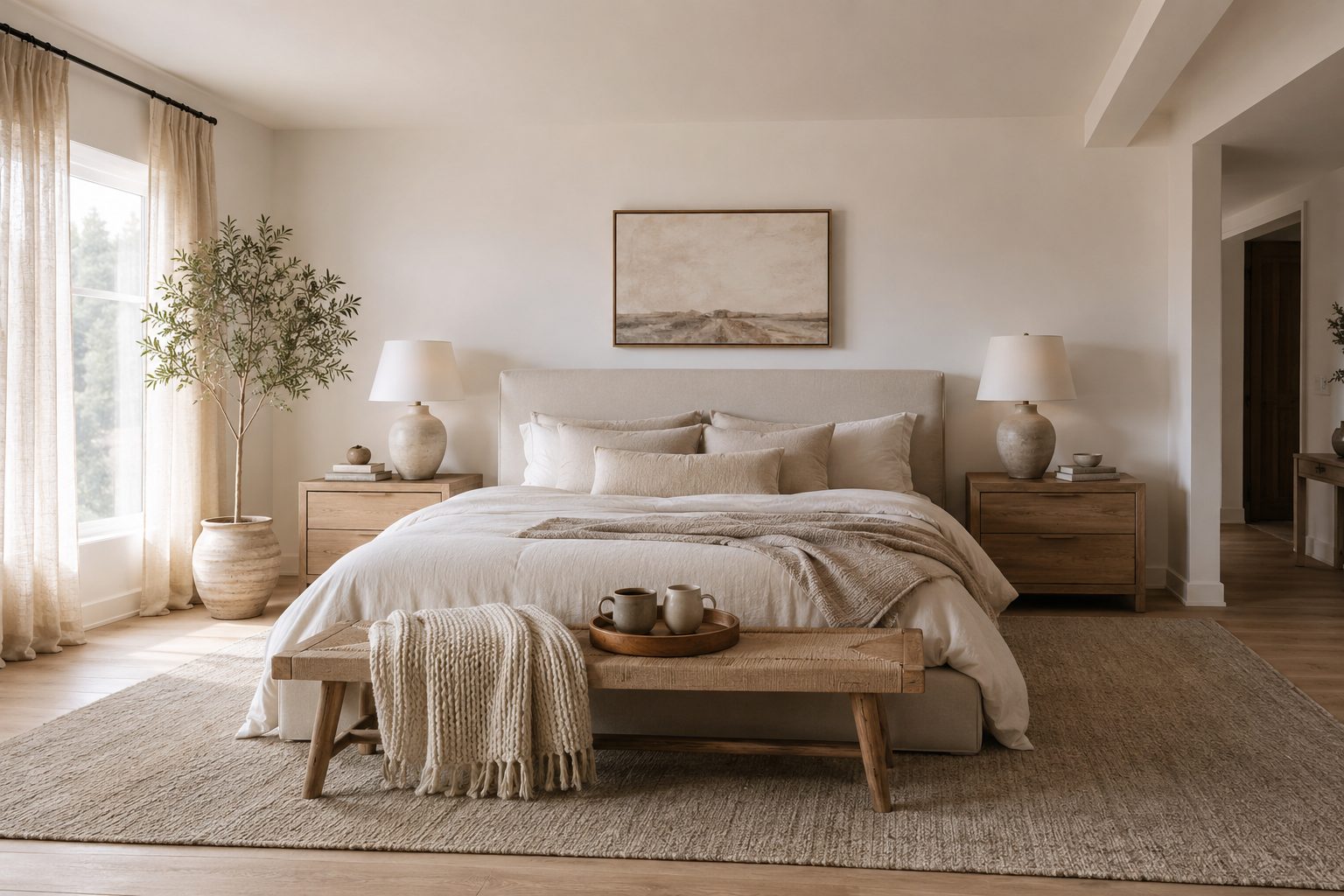
- A soft, neutral palette
Think warm whites, creamy beiges, and gentle taupes layered together. This keeps the room visually calm and allows texture to take the lead. - An upholstered bed as the focal point
A low-profile bed with a fabric headboard in linen or performance weave sets a grounded, quiet tone. Clean lines matter more than ornate detail here. - Layered, tonal bedding
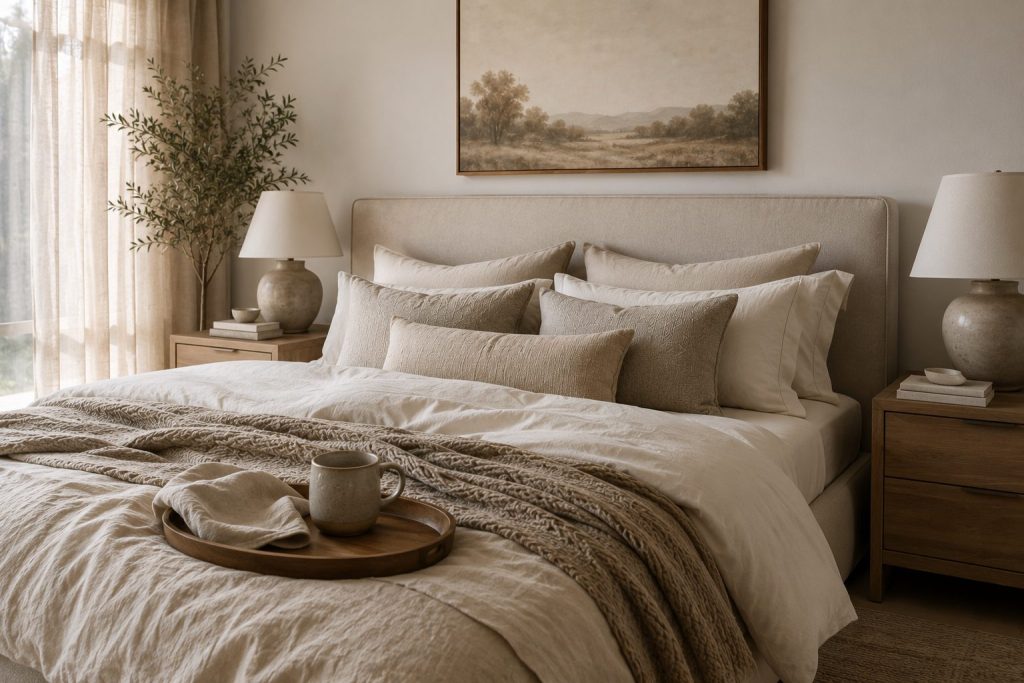
Crisp cotton sheets, a slightly heavier duvet, and a relaxed throw in a knit or waffle texture. The key is variation within the same color family. - Natural wood accents
Light oak or soft walnut nightstands bring warmth without visual weight. Look for simple silhouettes with subtle grain. - Soft, diffused lighting
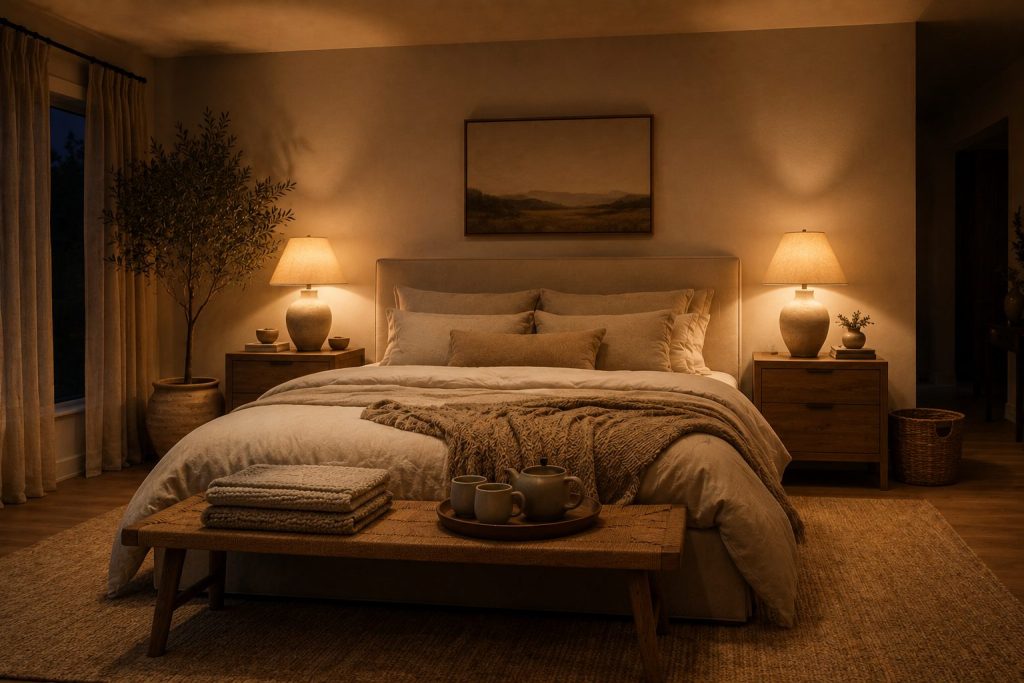
Fabric-shade table lamps or wall sconces create that warm, evening glow. Nothing harsh or overly bright. - Minimal, intentional decor
A ceramic vase, a small stack of books, maybe a single framed artwork. Everything feels placed, not filled. - A grounded foundation underfoot
A neutral area rug with a low pile or subtle pattern anchors the bed and softens the room.
Why this works: The palette stays restrained, so texture and proportion do the heavy lifting. It feels calm because nothing competes for attention.
Pieces to Recreate This Style
- Upholstered platform bed
Look for a soft beige or warm ivory fabric with a low, squared headboard. This becomes the visual anchor of the room. - Neutral cotton or linen sheet set
Breathable, slightly matte finishes feel relaxed but still refined. Avoid anything overly shiny. - Full, plush duvet insert + cover
Choose a slightly oversized insert for that fuller, hotel-like drape. - Textured throw blanket
A chunky knit or waffle weave in a tonal shade adds depth without breaking the palette. - Layered pillow set (Euro + standard + lumbar)
Stick to 2–3 tones max. Linen or cotton covers with subtle texture work best. - Light wood nightstands
Look for clean lines, minimal hardware, and a natural or lightly finished surface. - Ceramic table lamps with fabric shades
Soft white or sand-toned bases paired with linen shades help diffuse the light beautifully. - Neutral area rug (8×10 or larger)
Low pile, subtle pattern, or soft texture to sit under the bed and extend outward. - Simple wall art or framed textile
Abstract, muted tones or even a soft landscape. Keep scale generous but the palette restrained. - Decorative tray or small styling objects
Wood, stone, or ceramic pieces that feel tactile and understated. - Linen or cotton curtains
Light-filtering, slightly sheer fabrics that soften natural light throughout the day. - A subtle bench or stool at the foot of the bed
Upholstered or wood, something low and quiet that adds function without clutter.
Grab These First
If you’re starting from scratch, a few pieces will immediately set the tone:
- An upholstered bed in a warm neutral fabric
- A full, slightly oversized duvet with tonal bedding
- A soft, low-pile rug that extends beyond the bed


Smart Substitutions
- If you can’t invest in a new bed, use a neutral slipcover or headboard panel to soften what you have.
- Instead of solid wood nightstands, look for wood veneer with a matte finish and minimal detailing.
- Skip high-end linen sheets, and choose washed cotton with a relaxed texture. It gives a similar feel at a lower cost.
- Use plug-in sconces instead of wired lighting for that layered glow without renovation.
- Swap a large artwork for a framed fabric panel or even a toned-down print to keep costs in check.
- Try a flatweave rug in a neutral pattern if a plush wool rug isn’t practical.
How to Pull It Off
Start with the bed, since it naturally becomes the focal point. Choose your upholstered frame and place it so there’s breathing room on both sides.
Next, layer your bedding. Sheets first, then a full duvet, followed by pillows in varied sizes. Keep everything within a tight color range so it feels cohesive.
Add your nightstands and lighting. This is where the room starts to feel balanced. Symmetry helps here, even if it’s not perfectly matched.
Lay down the rug so it extends beyond the bed frame. This grounds the space and softens the overall look.
Finish by placing just a few decor pieces. A vase, a book stack, maybe a tray. I usually stop right before it feels “done” because that’s when it still feels calm.
Polishing Moves
- Keep pillow arrangements slightly relaxed, not overly structured
- Let the duvet drape naturally instead of pulling it tight
- Use warm-toned bulbs to maintain that soft evening glow
- Leave some negative space on surfaces so the eye can rest
- Align curtain rods higher than the window for a taller, airier feel
- Stick to two or three materials max per surface for a clean look
- Choose decor with soft edges or organic shapes to balance the clean lines
A Calm Space, Piece by Piece
This look comes together through restraint and consistency. A few well-chosen materials, a soft palette, and attention to proportion do most of the work. Start with the bed and build outward, one layer at a time.