*This post may contain affiliate links for which I earn commissions.*
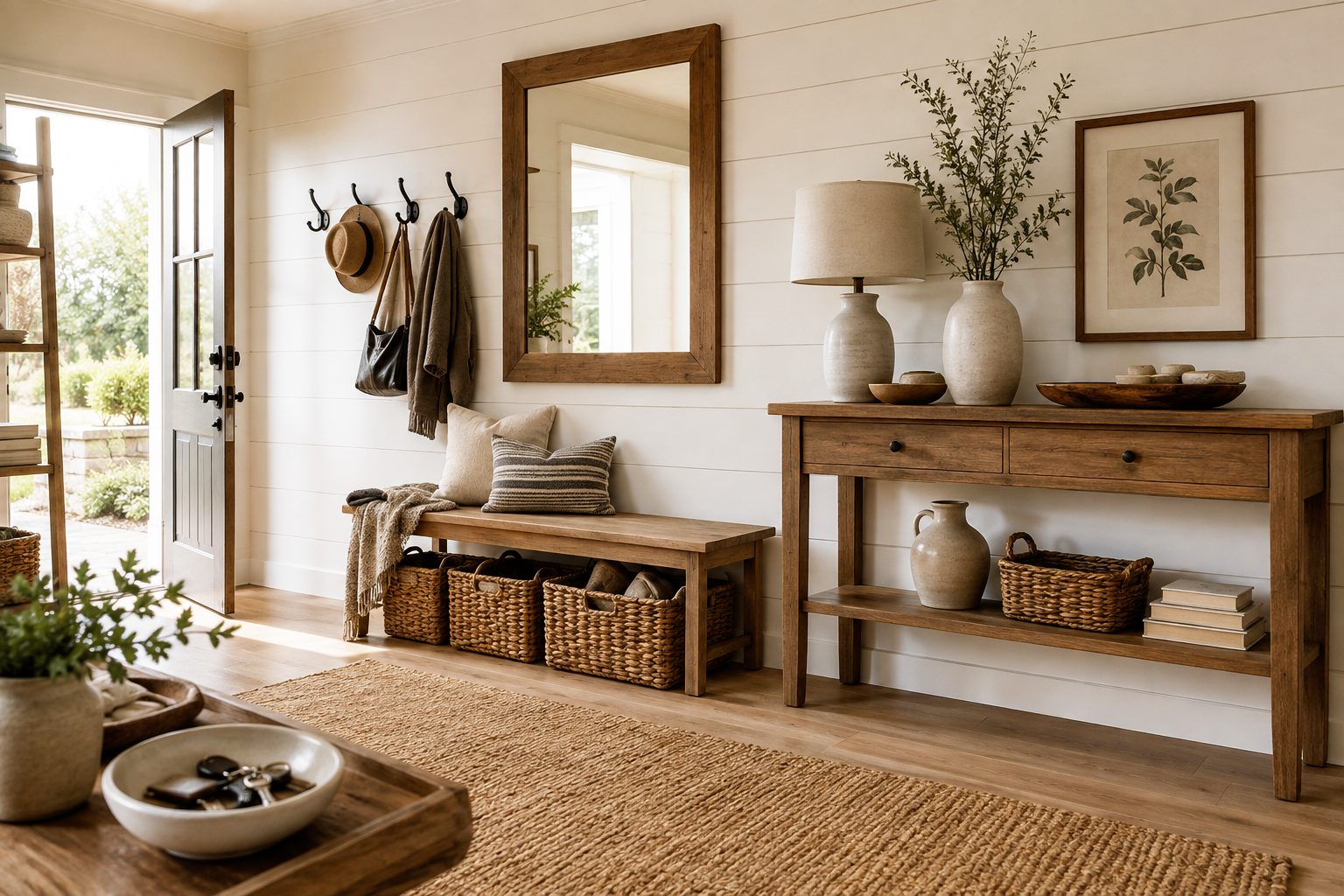
A busy entry can feel calm, tidy, and easy to maintain in less time than most people expect. The goal isn’t to create a picture-perfect setup. It’s to give everyday items a thoughtful place so shoes, bags, keys, and jackets stop collecting in random corners. Even a small entry can feel warm and inviting when a few simple systems work together.
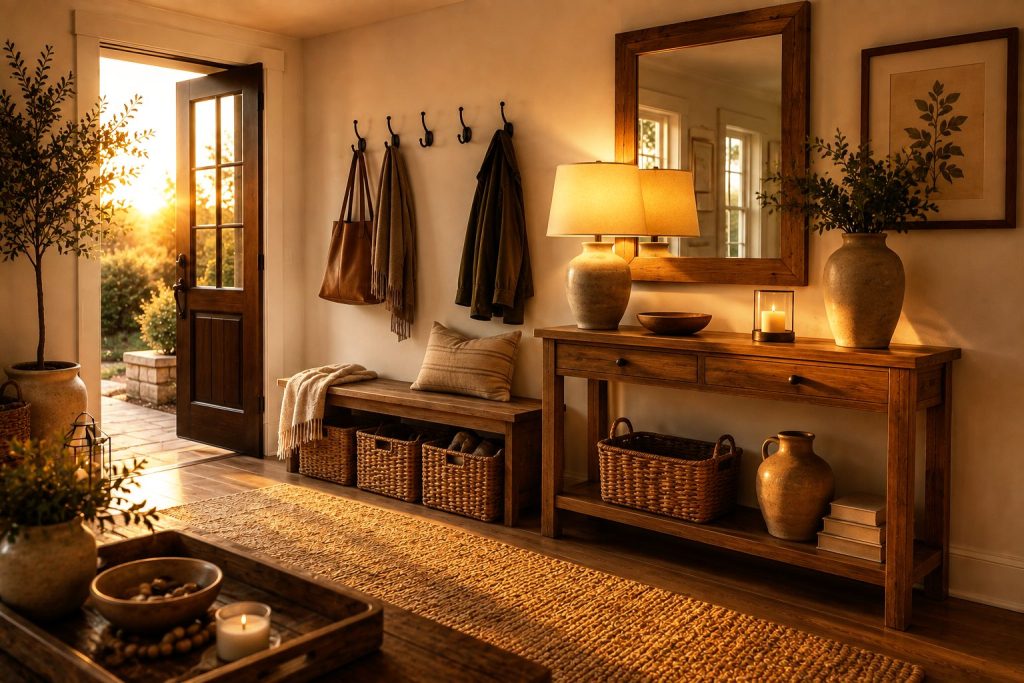
Quick Supply List
- Slim storage bench (36 to 48 inches wide): Look for a bench with hidden storage or an open shelf underneath for shoes.
- Wall hooks or a coat rack: Solid wood or matte metal options keep daily grab-and-go items accessible.
- Basket set: Natural woven baskets or durable fabric bins help contain loose items.
- Key tray or catchall bowl: A small ceramic or wood tray prevents keys from disappearing.
- Shoe tray: Especially useful near exterior doors to protect flooring from dirt and moisture.
- Console table (optional): A narrow design around 10 to 14 inches deep works well in tighter spaces.
- Storage labels (optional): Helpful for family households where multiple people share the space.
- Small washable rug: Adds texture while catching debris before it travels through the home.
- Wall mirror: A practical finishing touch that also helps the area feel more open.
- Lidded basket for seasonal items: Great for gloves, umbrellas, pet leashes, or reusable shopping bags.
Do This First
Before adding a single organizer, take five minutes to watch how the entry currently functions.
- Notice what lands there every day.
- Gather everything that’s currently sitting in the space.
- Separate items into daily-use, weekly-use, and occasional-use groups.
- Measure the available floor space before purchasing storage pieces.
- Decide how many people use the entry regularly.
A common mistake is organizing for an ideal lifestyle instead of actual habits. If three backpacks arrive every afternoon, the system should make room for three backpacks.
The Quick Method
Quick Version
- Clear the entire entry.
- Place a bench or shoe storage piece against the main wall.
- Install hooks at an easy-to-reach height.
- Add a tray for keys and small essentials.
- Use baskets to group loose items.
- Return only what belongs in the entry.
Detailed Version
1. Remove Everything
Start with a completely blank slate. Shoes, jackets, mail, umbrellas, and pet supplies should all come out temporarily.
2. Decide What Actually Belongs Here
The best entries hold only items used when coming and going.
Typical essentials include:
- Everyday shoes
- Frequently used coats
- Keys
- Wallets
- Dog leashes
- Reusable bags
Everything else can move to a closet, mudroom, or nearby storage area.
Why this works: Less inventory means fewer opportunities for clutter to build up.
3. Create a Landing Zone
Place a small tray or bowl near the door for keys, sunglasses, and pocket items.
A tray that’s roughly 8 to 12 inches wide is usually enough. Keeping it visible prevents the classic last-minute search before leaving the house.
4. Give Shoes a Dedicated Home
Position a shoe tray, bench shelf, or basket where shoes naturally get removed.
Aim for enough capacity to hold one or two pairs per household member. Overflow storage can live elsewhere.
5. Add Vertical Storage
Hooks are often the fastest solution for busy entries.
Install them at heights that make sense for the people using them. Family households may benefit from a lower row for children and a higher row for adults.
6. Contain Small Items
Assign baskets for categories such as:
- Winter accessories
- Pet supplies
- Sports gear
- Reusable shopping bags
When categories have clear boundaries, tidying becomes much faster.
Quick Checkpoint
At this stage, every frequently used item should have a visible home. The floor should remain mostly clear.
7. Introduce One Flexible Storage Spot
Reserve a basket or bin for temporary items that need attention.
Mail waiting to be sorted, library books, or packages heading back out can stay here instead of spreading across multiple surfaces.
8. Add One Decorative Layer
This could be:
- A framed print
- A mirror
- A small lamp on a console table
- A simple ceramic vase
I often find that one thoughtfully chosen decorative piece makes the entire setup feel intentionally finished rather than purely functional.
9. Test the Setup for a Week
Use the entry normally for several days.
If items consistently land somewhere other than their assigned spot, adjust the system rather than fighting the habit.
Optional Helpers That Make Organization Easier
A few additions can make daily upkeep even simpler:
- Storage benches with lift-up compartments
- Wall-mounted mail organizers
- Multi-compartment basket sets
- Narrow console tables with drawers


Common Mistakes (and Fixes)
- If shoes keep piling up outside storage areas… reduce the number of pairs kept in the entry and store extras elsewhere.
- If hooks become overcrowded… limit each person to one daily coat and one bag.
- If baskets constantly overflow… assign specific categories instead of using one large catchall.
- If the area still feels cluttered… remove decorative accessories until the practical storage is working smoothly.
- If keys keep going missing… move the tray closer to the door so it’s the first surface reached.
- If mail takes over the space… create a separate sorting station in another room.
Make It Your Own
Minimal and Clean
Choose black metal hooks, a simple oak bench, and matching baskets. Keep surfaces mostly clear.
Warm and Textured
Layer a woven rug, natural baskets, and warm wood finishes. Linen and ceramic accents help create a welcoming feel.
Family-Friendly
Add labeled bins, extra hooks, and durable washable materials. Function comes first, with decorative pieces kept simple.
Small-Space Approach
Use vertical storage, a narrow wall shelf, and a compact bench no deeper than 15 inches.
Polished and Editorial
Pair clean lines with a statement mirror, concealed storage, and a restrained color palette for an effortlessly styled look.
The “Looks Done” Checklist
Before calling the project finished, run through this quick list:
- □ Keys have a designated landing spot.
- □ Shoes are stored off the main walkway.
- □ Bags and coats have assigned hooks.
- □ Small items are contained in baskets or bins.
- □ The floor is easy to vacuum or sweep.
- □ One decorative element adds warmth without creating clutter.
A well-organized entry doesn’t need elaborate systems. A few thoughtfully chosen storage pieces, clear categories, and daily convenience are usually enough to create a space that feels calm the moment the door opens.